Selling a home is one of the biggest financial decisions you'll make — and knowing what to expect up front can take a lot of the stress out of the process. Whether you're in Greensboro,-

Dated: February 27 2025
Views: 42
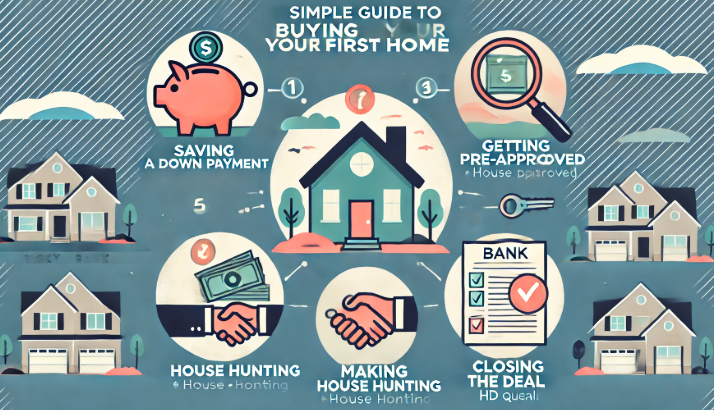
Before you start house hunting, take a close look at your finances.
Your credit score plays a big role in determining your mortgage interest rate. Most lenders prefer a score of at least 620 for conventional loans, but higher scores (above 700) will help you secure better rates and terms.
✅ Tip: Obtain a free credit report from sites like AnnualCreditReport.com and dispute any errors that may be hurting your score.
Use the 28/36 rule to estimate how much home you can afford. Lenders typically suggest that:
Housing costs (mortgage, taxes, insurance) shouldn’t exceed 28% of your gross monthly income.
Total debt payments (including credit cards and student loans) shouldn’t exceed 36% of your income.
✅ Tip: Use an online mortgage calculator to estimate monthly payments based on your budget.
Most first-time buyers need at least 3-5% down for a conventional loan, but 20% eliminates private mortgage insurance (PMI). Additionally, closing costs (fees for processing the loan, home inspection, appraisal, etc.) can range from 2-5% of the home price.
✅ Tip: Check if you qualify for first-time homebuyer grants or low down payment loan programs (like FHA, VA, or USDA loans).
A mortgage pre-approval is a lender’s written statement confirming how much they’re willing to lend you. It strengthens your offer when bidding on a home.
Gather financial documents (pay stubs, tax returns, credit history, bank statements).
Shop around for lenders and compare interest rates.
Apply for pre-approval and receive a pre-approval letter to use when making offers.
✅ Tip: Don’t open new credit lines or make large purchases before closing—it can affect your loan approval.
Now comes the fun part—house hunting!
Consider:
✅ Location (school districts, commute, crime rates)
✅ Home size (number of bedrooms/bathrooms)
✅ Condition (move-in ready vs. fixer-upper)
✅ Extra features (yard, garage, smart home tech)
A buyer’s agent represents your interests and helps negotiate the best deal. They also:
Provide market insights
Schedule home showings
Guide you through paperwork & legalities
✅ Tip: Choose an agent with experience in your target area and positive client reviews.
Once you find the right home, your agent will help you make a competitive offer.
Purchase price
Earnest money deposit (shows your commitment, typically 1-3% of the home price)
Contingencies (home inspection, financing, appraisal)
Closing timeline
The seller may accept, reject, or counteroffer. Be ready to negotiate on price, closing costs, or repairs.
✅ Tip: In competitive markets, consider writing a personal letter to the seller explaining why you love the home.
A home inspector will check the property for any hidden issues, such as:
Foundation cracks
Roof damage
Electrical/plumbing problems
If significant problems arise, you can negotiate repairs or price reductions with the seller.
Your lender will require an appraisal to confirm the home’s value. If the appraisal is lower than your offer, you may need to renegotiate or pay the difference.
After your offer is accepted:
Lock in your mortgage interest rate.
Review your Loan Estimate (details loan terms & closing costs).
Purchase homeowners insurance (required by lenders).
✅ Tip: Avoid major job changes or new debts—this can jeopardize your loan approval before closing.
You’ll sign legal documents, pay closing costs, and receive the keys to your new home!
Valid ID
Cashier’s check (for down payment & closing costs)
Proof of homeowners insurance
✅ Tip: Read all documents carefully before signing and ask questions if anything seems unclear.
Pre-qualification is a basic estimate of what you might qualify for based on self-reported financials.
Pre-approval is a more in-depth process where a lender verifies your income and credit, providing an official loan offer.
Yes! Lenders consider your debt-to-income (DTI) ratio. As long as your total debts (including your mortgage) stay below 36-43% of your income, you can still qualify.
Experts recommend setting aside 1-3% of your home’s value annually for maintenance and repairs.
FHA Loans: 580+
Conventional Loans: 620+
Best Interest Rates: 740+
On average, it takes 30-60 days from offer acceptance to closing, but market conditions can impact timing.
Buying your first home is a major investment, but with the right preparation and guidance, it can be a smooth and rewarding experience. Take your time, research your options, and work with professionals to help navigate the process.
If you’re ready to take the first step, connect with a trusted real estate agent and start exploring homes today!

Kristen Haynes is a true Entrepreneur with over 10 years of real estate experience and a 6 figure agent after her first year selling residential real estate in 2013. After being a top producing agent ....
Selling a home is one of the biggest financial decisions you'll make — and knowing what to expect up front can take a lot of the stress out of the process. Whether you're in Greensboro,-
Whether you're buying your first home, selling a property you've outgrown, or just starting to explore the Triad market, you probably have questions. Here are answers to some of the ones we hear
For most homebuyers, financing is the single biggest piece of the puzzle — and understanding your options before you start house hunting can save you time, stress, and money. Here's a
If you're thinking about buying a home in Greensboro, Winston-Salem, High Point, or one of the surrounding Triad communities, you're in good company. This region continues to draw buyers who want
Should you require assistance in navigating our website or searching for real estate, please contact our offices at 1004 N Elm St, Greensboro, NC 27401.

 © 2026 Triad MLS, Inc. All rights reserved. IDX information is provided exclusively for personal, non-commercial use, and may not be used for any purpose other than to identify prospective properties consumers may be interested in purchasing. Information is deemed reliable but not guaranteed. This site will be monitored for "scraping" and any use of search facilities of data on the site other than by potential buyers/sellers is prohibited. All Sale data is for informational purposes only and
is not an indication of a market analysis or appraisal. Data cannot be redistributed and cannot be used for any reason other than provided in the contract. Properties marked with the Triad MLS, Inc. icon are provided courtesy of the Triad MLS, Inc.'s, Internet Data Exchange Database. Data last updated September 21, 2026 1:15 PM UTC
Show More...
© 2026 Triad MLS, Inc. All rights reserved. IDX information is provided exclusively for personal, non-commercial use, and may not be used for any purpose other than to identify prospective properties consumers may be interested in purchasing. Information is deemed reliable but not guaranteed. This site will be monitored for "scraping" and any use of search facilities of data on the site other than by potential buyers/sellers is prohibited. All Sale data is for informational purposes only and
is not an indication of a market analysis or appraisal. Data cannot be redistributed and cannot be used for any reason other than provided in the contract. Properties marked with the Triad MLS, Inc. icon are provided courtesy of the Triad MLS, Inc.'s, Internet Data Exchange Database. Data last updated September 21, 2026 1:15 PM UTC
Show More...
